B2B Onboard vs SparkLayer
Registration form or full B2B catalog. Different jobs, different tools.
SparkLayer ships a full wholesale buying interface with theme injection. B2B Onboard does the step before: a registration form on App Proxy, an approval queue, and a clean handoff to Shopify's native B2B Company. Here is where the two apps differ and where SparkLayer is the better choice.
Last updated 2026-06-13
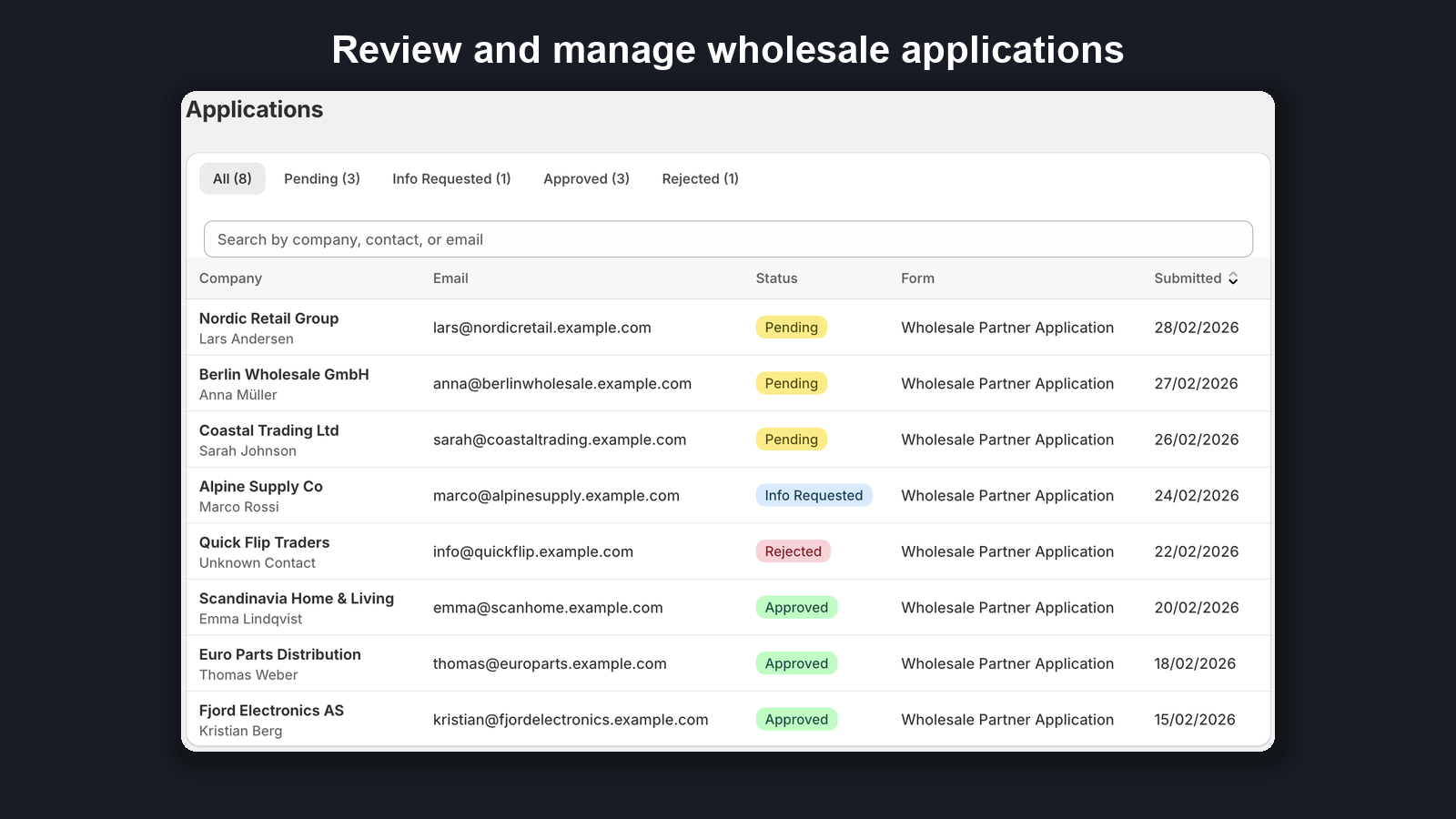
How B2B Onboard and SparkLayer differ
Four workflow areas where the two apps make different trade-offs.
App Proxy vs theme injection
B2B Onboard renders forms through Shopify App Proxy: it never edits your theme files and never injects scripts into your storefront pages. An optional page block in the theme editor can display the hosted form inside one of your own pages, and is removed again in one click. Uninstall and the storefront looks the same as before. SparkLayer installs into the theme to render its B2B catalog and account pages. The trade-off is real: a richer storefront experience, at the cost of theme entanglement.
Five-minute setup vs full integration
B2B Onboard is configured entirely inside the Shopify admin. Build a form, pick a template, set approval rules. Done. SparkLayer is a deeper integration with more moving parts, and the public reviews include "Sooooo complicated" as a setup experience. That depth is the point of the product, but it is also the cost.
Tax handling through native Shopify B2B
B2B Onboard hands approval to Shopify's native B2B Company model on Basic, Shopify, Advanced, and Plus. Tax exemption sits inside Shopify, not a parallel layer. SparkLayer has had public reviews flagging tax behavior as not business-friendly. EU VAT numbers in B2B Onboard are checked against VIES and UK VAT numbers against HMRC at submission and stored on the application.
Scope: registration vs full buying experience
SparkLayer covers the buying side of B2B: ordering pads, price lists, account-level pricing inside the storefront. B2B Onboard covers the step before that: getting a customer through registration, approving them, and creating the Shopify Customer and B2B Company so wholesale pricing applies. Different stages, different tools.
Where SparkLayer is a good fit
SparkLayer is a good fit for stores that need a richer wholesale buying interface in the storefront: ordering pads, price lists, quote requests, account-level pricing displayed during shopping. If the primary need is "my approved wholesale buyers should have a better catalog experience than my retail customers," SparkLayer is built for that.
B2B Onboard is the better choice when the bottleneck is upstream of catalog: an application form, a verification step, an approval queue, and a clean customer record handed to Shopify's native B2B Company.
Data stored in the EU (Frankfurt, AWS eu-central-1). GDPR compliant with a full Data Processing Agreement. Free tier available so you can run a side-by-side test before you choose.
Different stages, different tools.
If you need a wholesale registration and approval flow that never edits your theme files, B2B Onboard has a free tier and a five-minute setup. If the question is closer to "how do my approved buyers shop," SparkLayer is the place to look.